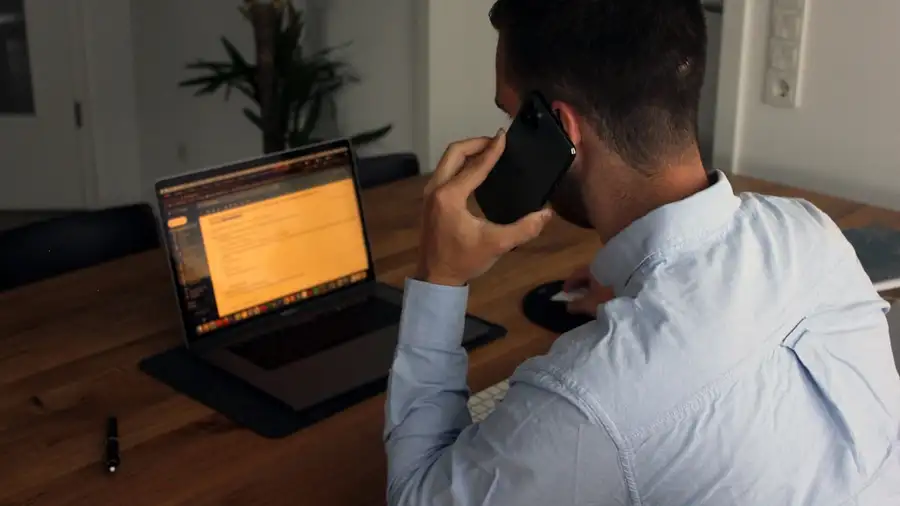
For most of the last decade, the weak point in these operations was the human being on the other end: an accent that did not match the company, a script that broke under an unexpected question, a video call that was always declined. That weak point is closing. In files opened over the past two years, we have seen synthetic voice and video move from novelty to routine.
Three places it shows up
The first is the advertisement. A national broadcaster's studio, a familiar presenter, a finance minister or a well-known founder recommending a platform in fluent Swedish, Norwegian or Finnish. None of it happened. The footage is real, the words are not, and the clip is convincing enough that people report having watched it several times before registering.
The second is the call. Once an account exists, the "adviser" phones — and where the operation has recordings to work from, the voice can be modelled on a real person, up to and including someone the client has previously spoken to at a genuine firm.
The third is verification itself. When a client asks to see who they are dealing with, a short video call is now offered rather than refused. A face appears, moves, and answers. The willingness to appear on camera used to be a reassurance. It no longer is.
Why it works on careful people
Because it attacks the checks people actually perform. Most of us verify by recognition rather than by record: does the face look right, does the voice sound like the person, did they agree to a video call. Synthetic media answers all three convincingly and answers none of the questions that still work — company number, register entry, the name on the receiving account.
There is a further effect we see in intake conversations. Clients who were deceived by a convincing video are noticeably more reluctant to describe what happened, because the deception feels like a personal failure of judgment. It is not. It is a failure of a verification method that stopped working faster than the public was told.
What still cannot be synthesised
The paperwork. Whatever the call sounded like, the money went somewhere with a name on it, and that part remains as documentary as ever:
- The receiving account or wallet, which belongs to a real institution or service
- The company details on the website, which either appear on a public register or do not
- The payment route, which passed through providers that keep records
- The messages, which exist whether or not the voice in them was real
This is why a case built on a deepfake approach is not weaker than any other. The synthetic layer sits on top of an ordinary payment trail, and it is the trail we work with.
The check that survives
One habit is worth more than any attempt to spot an artefact in a video: verify through a channel the other party did not choose. Look the firm up on the regulator's own register and call the number published there, not the number you were given. If the person you were speaking to is genuine, that costs you five minutes. If they are not, it ends the conversation.
We expect this method to keep spreading, and we would rather clients hear it plainly than be told to trust their instincts about whether a face looks real. That instinct is no longer reliable, and pretending otherwise helps nobody.